
Transcript
Announcer:
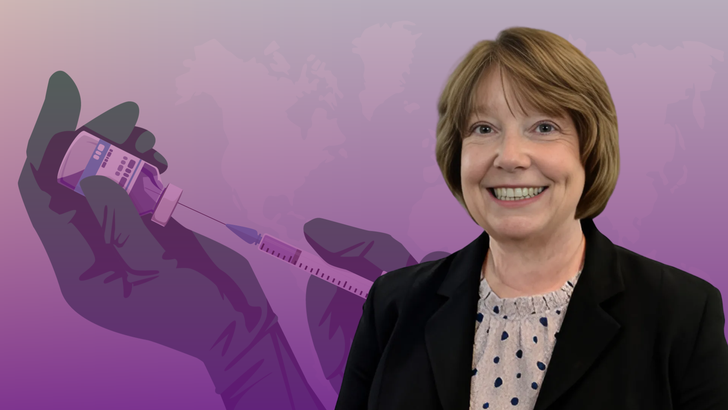
This is VacciNation on ReachMD. On this episode, we’ll hear from Dr. Ruth Carrico, a family nurse practitioner based in Louisville, Kentucky; Adjunct Professor in the Division of Infectious Diseases at the University of Louisville School of Medicine; and Senior Partner and Co-Owner of Carrico and Ramirez, a clinical practice and consulting company. She’ll be discussing the importance of vaccinating children against diseases like diphtheria, tetanus, pertussis, hepatitis B, and polio. Here’s Dr. Carrico now.
Dr. Carrico:
So first, it’s important that not only we recognize but we communicate to our patients that childhood vaccination is one of the most effective public health interventions, significantly reducing morbidity and mortality that’s caused by infectious diseases.
We know that vaccines for pertussis, tetanus, diphtheria, hepatitis B, and polio form the foundation of our early childhood immunization schedules. And although we’ve made remarkable progress, these diseases continue to remain a threat globally, particularly in communities with low vaccination coverage. Now, it’s difficult for us to imagine that we have areas in the United States with low vaccination coverage, but we do, and it is critical that we continue to have discussions about vaccines and vaccinations. So my patients will ask me two common questions. One is, will this vaccine help me or help my child? And secondly, will this vaccine hurt me or hurt my child?
So we need to be aware that our patients are coming from a very different place right now with their discussion about vaccinations and their desire to have information on the “why” behind vaccines.
These infections continue to pose problems, both in the US and worldwide, and failure to vaccinate leads to decreased immunity and increased disease susceptibility. Outbreaks can occur if individuals, particularly our children, are infected; long-term disability can be a result, and then there’s the ongoing healthcare burden. So if we have a child that becomes ill from one of these vaccine-preventable diseases, they may require ongoing health care. In addition, it is a disruption to the life and lifestyle of that child and their parents, guardians, or families. We know that if we don’t deal with these diseases and we don’t do what we can to promote herd immunity—and that means immunity across a large population—we can have outbreaks.
So pediatric vaccination is important not only for the individual. It is important for the child. It is important for that family. It is also important for the community.
These combination vaccines can be incredibly effective because they minimize the number of injections or minimize the number of return visits. It also reminds me that we need to always be thinking about coadministration. That means that we may have a combination vaccine and another vaccine, so maybe we have one of these combination vaccines, but it’s also flu season, for example. So can we give a flu shot with another vaccine? So the answer the CDC has told us is to look at every healthcare visit as a potential missed opportunity for vaccination. Do your due diligence as a healthcare provider. Think about what that patient may need. How can I best provide that for them? How can I minimize the number of injections and the number of return visits? How can I get as much done at one time as I can? And then make sure that we’re taking the opportunity to explain risk and benefit and to explain the “why” behind what we are suggesting or recommending.
Announcer:
That was Dr. Ruth Carrico explaining why it’s so critical to protect children against diseases like diphtheria, tetanus, pertussis, hepatitis B, and polio. To access this and other episodes in our series, visit VacciNation on ReachMD.com, where you can Be Part of the Knowledge. Thanks for listening!
